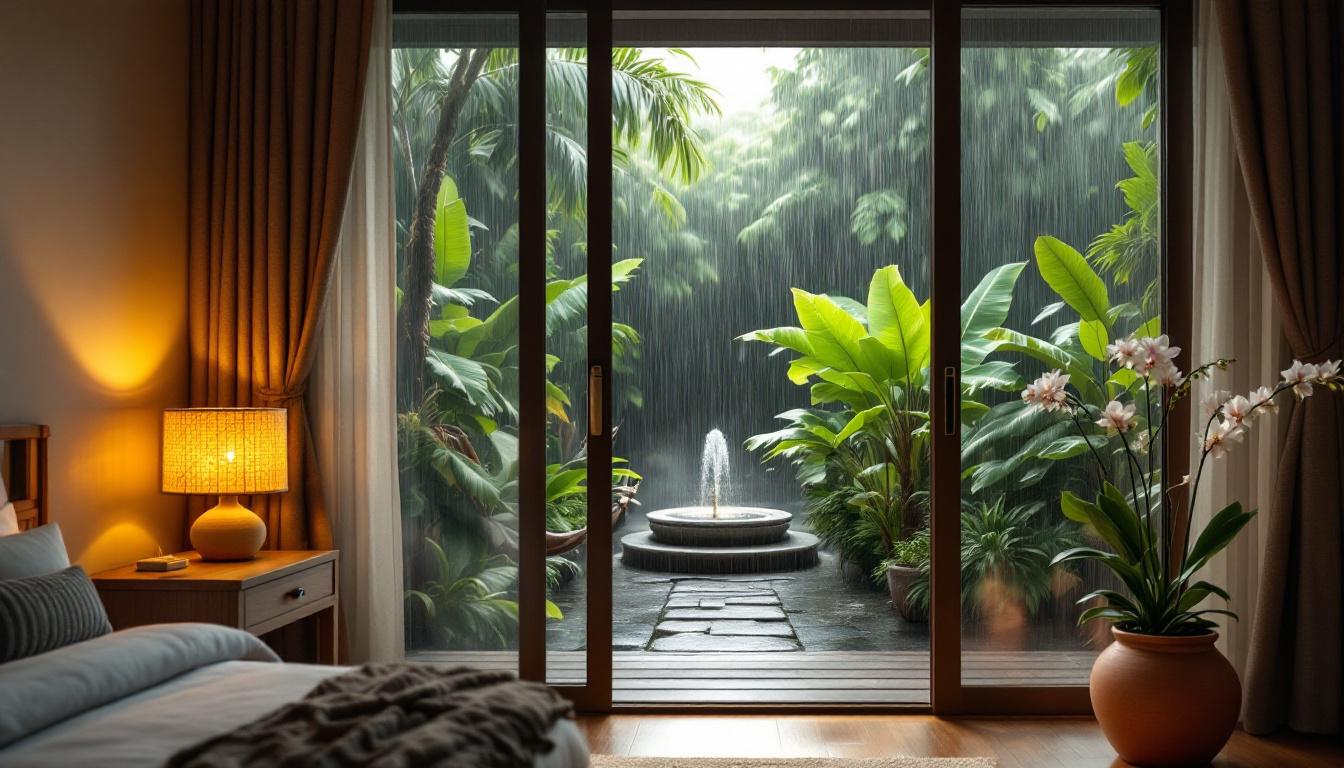
Thailand Rainy Season Hotel Deals 2026 — Monsoon Bargains Worth Knowing
Thailand Rainy Season Hotel Deals 2026 — Monsoon Bargains Worth Knowing
The monsoon season gets a bad reputation in Thailand travel circles. People hear "rainy season" and imagine two weeks trapped in a hotel room watching water pour down the windows. The reality is more nuanced — and much more useful for travellers who know how to work with it.
Thailand has two distinct weather patterns on its two coasts, which means the rainy season doesn't hit everywhere at the same time. Understanding this is the key to finding genuinely great hotel deals while still having an excellent holiday.
How Thailand's Monsoon Works
The Andaman coast (Phuket, Krabi, Koh Lanta, Khao Lak): Monsoon hits from May/June through October. The southwest monsoon brings rain, rough seas, and low tourist numbers. Hotel prices can drop 40–60% from peak season rates.
The Gulf coast (Koh Samui, Koh Phangan, Koh Tao): These islands have the opposite cycle. Their monsoon season is November to January, while the Andaman coast is at its clearest. This is why experienced travellers who want good beach weather in November through January go to the Gulf side.
Northern Thailand (Chiang Mai, Pai, Chiang Rai): Monsoon from June to September. Rain is usually in heavy afternoon showers rather than all-day downpours. Mornings are often clear and beautiful.
Bangkok and Central Thailand: Rainy season June to October. The heat is tempered by rain, but urban travel continues easily. Flooding can be an issue in low-lying areas in bad years.
The Real Story: Monsoon Rain in Thailand
Thailand's monsoon rain is mostly not "endless grey drizzle." It's typically heavy showers that arrive in the afternoon or evening and clear within a few hours. Mornings in many destinations are often clear and sunny.
What this means practically: - Temple visits, markets, inland activities — all fine in the morning - Beach swimming is possible on many days, though seas can be choppy - Waterfalls and rivers are at their most spectacular - National parks are lush and green - Almost no tourist crowds
The exceptions: during the height of the Andaman monsoon (September–October), seas on the west coast can be genuinely rough and some activities (Similan Islands trips, long-tail tours) are cancelled on safety grounds.
Best Rainy Season Deals by Region
Phuket Rainy Season (May–October)
Phuket resort prices in low season are extraordinary. A resort that costs 8,000 THB/night in January can be 3,500–4,500 THB/night in August — the same room, the same pool, the same breakfast. The beach is quieter (sometimes too rough for swimming) but the resort experience is fully intact.
On EezyStay, Phuket low-season rates represent the biggest absolute savings — we're talking 3,000–5,000 THB per night off peak prices on quality properties.
Best Phuket rainy season spots: Old Phuket Town (excellent weather-independent activities, great food scene), Kata Noi and Karon (somewhat sheltered from the worst swells), Kamala Beach (fairly protected).
Krabi and Railay (May–October)
The limestone cliffs and jungle don't care what season it is. They look spectacular in the rain, possibly more so. Railay Beach can still be accessed (check conditions) and some of the cave temples and viewpoints are actually better in the rain. Hotel rates drop 40–50%.
Koh Lanta (May–October)
Koh Lanta actually closes some operations in the deep monsoon (the island is accessible but some resorts and guesthouses shut down for the season). The ones that remain open often offer significant discounts. May and October are the best shoulder months — less rain, much lower prices.
Chiang Mai Rainy Season (June–September)
This is arguably Chiang Mai's most beautiful season for non-beach travel. The rice paddies surrounding the city turn electric green. The mountains are draped in mist. The waterfalls (Nam Tok Mae Sa, Huai Nam Dang) are at full flow. Hotel prices drop 30–40% from the peak cool season rates.
The Ping River area, the handicraft villages, and the temple circuit are all beautiful in the rain. You just need a poncho and a change of attitude.
Bangkok Rainy Season (June–October)
Bangkok is a city — rain affects it less than beach destinations. The BTS Skytrain and MRT keep you dry between destinations. Museum, temple, and street food tourism continues unaffected. Hotel prices drop meaningfully (20–30%) and the heat is less brutal due to cloud cover.
Gulf Islands: Counter-Season Advantage
Here's the secret that smart travellers use:
When the Andaman coast is in monsoon (June–October), the Gulf islands are in their dry, sunny season.
Koh Samui, Koh Phangan, and Koh Tao enjoy some of their clearest weather from June through September. And because the attention has shifted to the Andaman coast during high season (November–April), the Gulf islands in their own high season are actually less crowded than Phuket at peak season.
This is genuinely one of the best value propositions in Thai travel.
How Much Can You Save?
Some real comparisons:
| Property Type | Peak Season | Low Season | Saving |
|---|---|---|---|
| Phuket boutique resort | 6,000 THB | 2,800 THB | 3,200 THB/night |
| Koh Lanta beach bungalow | 1,500 THB | 700 THB | 800 THB/night |
| Chiang Mai boutique hotel | 2,500 THB | 1,500 THB | 1,000 THB/night |
| Krabi guesthouse | 900 THB | 500 THB | 400 THB/night |
These are real figures based on typical market rates, not promotional pricing.
EezyStay and Rainy Season Deals
EezyStay's lower commission model means that even the already-discounted low-season rates are cheaper on our platform than on Agoda or Booking.com. The OTAs apply their commission markup regardless of whether it's peak or low season.
On a 10-night Phuket rainy season stay, the difference between EezyStay and a major OTA can be 5,000–10,000 THB even at the already-reduced low season rate.
Don't write off the rainy season. Embrace the green, the waterfalls, the empty resorts, and the dramatic cloud landscapes. Thailand in the rain is beautiful in a completely different way.
Related Reading
- Thailand Weekend Getaway Hotels from Bangkok 2026 — Best Escapes 2–3 Hours Away
- Thailand in Monsoon Season: Hotels, Deals & What to Expect
- Thailand Low Season Travel Guide — May to October Hidden Value
- Thailand Cool Season 2026 — Best Destinations for November to February
- Chinese New Year Thailand Hotels 2026 — Busy Period, Book Ahead
Frequently Asked Questions
How much cheaper are Thailand hotels in rainy season?
Thailand hotel rates in rainy season (May to October on the Andaman coast; October to December on the Gulf coast) drop 30–50% from peak season pricing. A Phuket beachfront resort that costs 4,500 THB in December can be found for 2,000–2,500 THB in July. Combined with EezyStay's below-OTA commission rates, rainy season Thailand hotel deals represent the best accommodation value in Southeast Asia.
Is it worth visiting Phuket in rainy season?
Phuket in rainy season (May to October) is a mixed experience — daily rain, rough seas, and some beach closures for swimming. However, accommodation is 40–50% cheaper, the island is far less crowded, and rain is often limited to afternoon storms that clear within hours. Cultural activities (temples, cooking classes, Phuket Old Town exploration) continue regardless of weather. For beach-focused travel, choose a destination on the Gulf coast instead.
Which Thailand destination has the best rainy season hotel deals?
Krabi, Phuket, Khao Lak, and Koh Lanta on the Andaman coast see the biggest proportional price drops in low season. These destinations have high peak-season demand (November to April) and large accommodation supply — the combination creates significant price pressure in the wet months. EezyStay's below-OTA rates on these destinations are particularly notable in low season.
Can I still enjoy a beach holiday in Thailand during rainy season?
Yes, if you choose the right coast. Koh Samet (Gulf of Thailand, near Bangkok) gets significantly less rain than most of Thailand in the May to October period. Koh Phangan and Koh Tao are reasonable in June and July before their own rainy season hits October to December. The key is choosing the Gulf coast when the Andaman is rainy, and vice versa.
Do Thailand beach resorts close during rainy season?
Most do not fully close. Some smaller boutique operations and bungalow places on Koh Lanta and Khao Lak close June to September. The majority of Phuket, Krabi, and Koh Samui accommodation stays open year-round, though some facilities (watersports, boat tours) may be suspended during rough weather periods. Always check before booking if your planned activities depend on sea conditions.