Thailand Monsoon Season Hotels
What Monsoon Season Actually Feels Like on the Ground
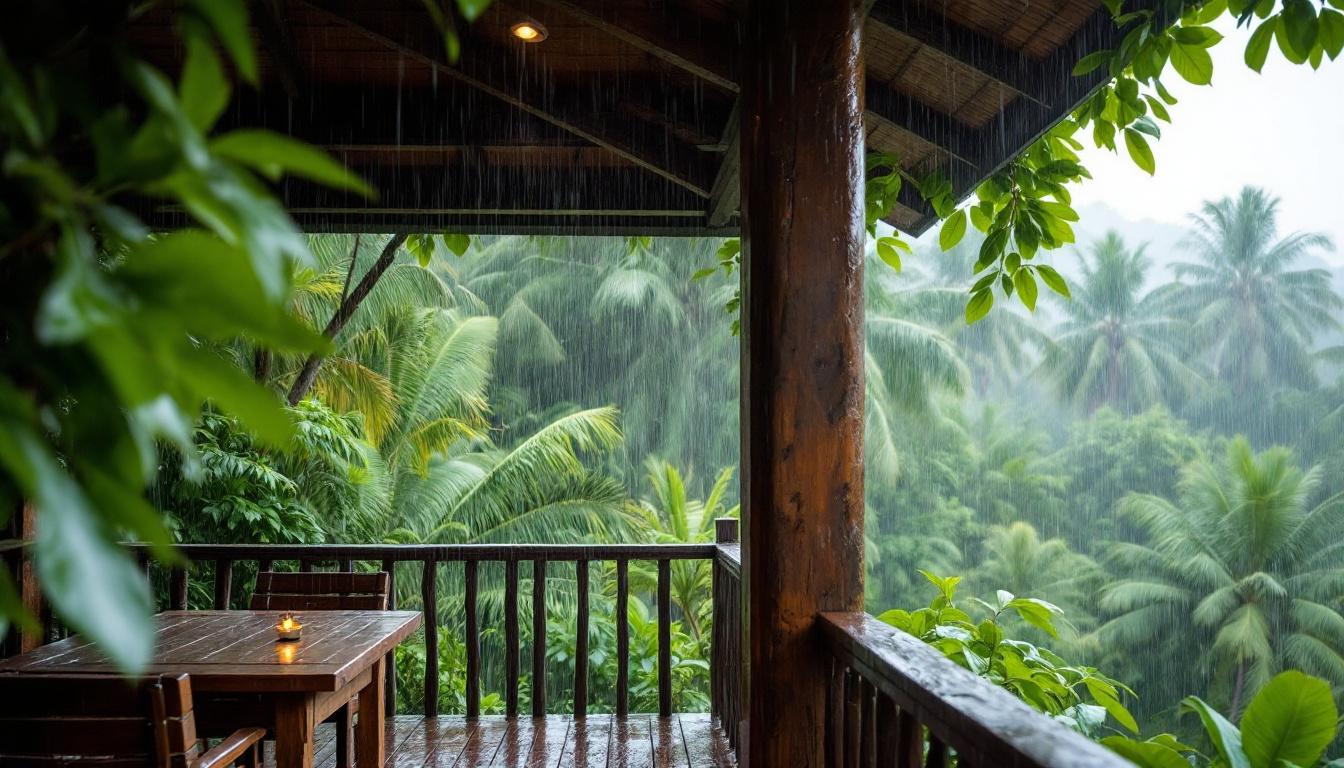
"Monsoon" sounds relentless. The reality in most of Thailand is:
- Mornings are often bright and clear
- Heavy rain usually arrives in the afternoon (2–6pm)
- Rain is intense but typically lasts 1–3 hours
- Evenings clear up again in many areas
It's not ideal for beach holidays if your plan was to lie on the sand all day. But it's perfectly fine for exploring temples, doing day trips, visiting markets, eating your way through street food, or simply enjoying the quieter, greener version of Thailand that low-season brings.
The exception is the Gulf of Thailand coast in October–November — Koh Samui specifically can get sustained, multi-day heavy rain during its monsoon peak.
How Much Do Hotel Prices Drop?
This is where it gets interesting for budget-conscious travellers.
| Destination | Peak Season (Dec–Feb) | Monsoon Low (Jul–Sep) | Saving |
|---|---|---|---|
| Phuket mid-range resort | AUD $175–250/night | AUD $75–110/night | ~55% |
| Krabi boutique hotel | AUD $130–180/night | AUD $60–90/night | ~50% |
| Koh Lanta bungalow | AUD $90–130/night | AUD $40–60/night | ~55% |
| Chiang Mai boutique | AUD $85–120/night | AUD $50–70/night | ~40% |
| Bangkok mid-range | AUD $85–130/night | AUD $60–90/night | ~30% |
| Koh Samui resort | AUD $180–300/night | AUD $90–150/night | ~50% |
The savings are real and substantial. A couple booking a week in Phuket during peak season might spend AUD $1,750–2,500 on accommodation alone. The same quality hotel in July–August: AUD $525–770.
The Best Destinations During Monsoon Season
Chiang Mai (June–September)
Chiang Mai is arguably the best monsoon-season choice in Thailand. The rain keeps it cool (relative to Bangkok), the surrounding countryside turns vivid green, and the waterfalls around Doi Inthanon National Park are at their best.
Tourist crowds thin out significantly. The Night Bazaar and Nimman district restaurants still buzz, but without the December-January crush. Hotel rates drop 35–45% from peak.
What to do: cooking classes, temple circuits, day trips to hill tribe villages, waterfall hikes, Doi Suthep in the mist.
Koh Samui (June–August)
Remember the timing quirk — Koh Samui's wet season is October–December, not June–August. The Gulf of Thailand coast is actually in decent shape during the months when Phuket is getting hammered.
June–August on Koh Samui: manageable rain, lower prices, calmer Gulf waters, good diving conditions on Koh Tao (just north). This is genuinely good value without significant weather risk.
Bangkok (Year-Round)
Bangkok doesn't really have an off-season for the city itself. Afternoon rains June–October don't prevent temple visits, street food runs, rooftop bars, or markets. The BTS Skytrain keeps you dry between air-conditioned stops.
Hotel prices drop 25–35% from peak, and the city is noticeably less crowded. For cultural tourism — the Grand Palace, Chatuchak Market, the Chao Phraya river — monsoon season is actually a relaxed and affordable time to visit.
Pai (June–September)
This small mountain town in northern Thailand is stunning in the rainy season. The valley fills with cloud, rice terraces glow green, and the town's relaxed backpacker vibe deepens without the crowds. Roads stay passable — the famous Pai Canyon road is fine.
Budget guesthouses drop to 400–800 THB per night for a private room. Some of the most atmospheric accommodation in Thailand at its cheapest.
What to Avoid During Monsoon Season
Koh Phi Phi (June–September): Rough seas make the ferry crossing unpleasant, and some services are suspended. Most beach activities are limited.
Koh Phangan (October–November): Gulf monsoon peak. The Full Moon Party still runs, but the surrounding weather can be genuinely rough for days at a time.
Koh Samui (October–November): This is when the Gulf monsoon hits hardest. Some resorts close for maintenance. Not recommended unless you're specifically coming for a deal and have flexible plans.
Southern island hopping: Multiple-island itineraries are harder to execute when sea conditions are unpredictable. Stick to one base location if travelling in monsoon season.
Packing for Monsoon Thailand
The essentials are different from peak season:
- Lightweight rain jacket or poncho — Umbrellas work for light rain but fold instantly in a downpour. A rain jacket protects your bag too.
- Waterproof bag or dry bag — For beach days and any island excursions
- Quick-dry clothes — Everything in monsoon season gets damp. Fast-drying synthetic fabrics beat cotton.
- Insect repellent — The wet season brings more mosquitoes, especially at dawn and dusk
- Sandals with grip — Wet stone temples and slippery streets. Thongs/flip-flops without grip are a hazard.
Getting the Best Monsoon Hotel Deals
Low season hotel prices are already lower than peak — but you can go further.
Book closer to arrival: Occupancy in monsoon season is low enough that hotels will offer rooms at significant discounts for same-week bookings. You have negotiating power.
Ask for inclusions: Breakfast, airport transfers, and room upgrades are easy to negotiate directly with hotels when occupancy is 30–40%. They'd rather add value than drop the rate publicly.
Stay longer: Monthly rates are the biggest discounts in the Thai hotel market. A boutique hotel in Chiang Mai at 2,500 THB per night during monsoon season might offer a monthly rate of 35,000–45,000 THB — a further 40–50% saving.
Compare directly: Prices drop faster on OTAs in low season (more dynamic pricing) but direct booking still often beats them. Check both.
Related Reading
- Thailand Weekend Getaway Hotels from Bangkok 2026 — Best Escapes 2–3 Hours Away
- Thailand Rainy Season Hotel Deals 2026 — Monsoon Bargains Worth Knowing
- Thailand Low Season Travel Guide — May to October Hidden Value
- Thailand Cool Season 2026 — Best Destinations for November to February
- Chinese New Year Thailand Hotels 2026 — Busy Period, Book Ahead
For below-OTA monsoon rates across Thailand, EezyStay.com is worth a look before you commit anywhere else. Low-season deals on EezyStay start from a lower base than Booking.com or Agoda list at.
The Bottom Line on Monsoon Season
Monsoon Thailand isn't for everyone. If a beach holiday with guaranteed sunshine is non-negotiable, stick to November–April on the Andaman coast.
But if you're flexible, curious about a quieter Thailand, and want to cut your hotel costs roughly in half — the wet season delivers. The temples don't close. The food doesn't get worse. The people don't leave. The country just gets cheaper and calmer.
That's not a bad trade.
Frequently Asked Questions
When is Thailand's monsoon season?
Thailand's monsoon season runs approximately May to October, but timing varies by region. The Andaman coast (Phuket, Krabi, Khao Lak, Koh Lanta) is most affected May to October. The Gulf of Thailand coast (Koh Samui, Koh Phangan, Koh Tao) has its own rainy period October to December. Bangkok and the north experience June to September as the main wet months. No region is rainy year-round.
Is Thailand safe to visit during monsoon season?
Yes. Monsoon season in Thailand is safe for tourists with standard precautions. Rain is typically afternoon and evening thunderstorms, not continuous downpours. The exceptions are severe weather events during peak monsoon months — check local conditions during any extended storm period, avoid open water in rough weather, and note that some dive and snorkel sites close for safety. Flooding in some areas (particularly in the south and Chiang Mai in bad years) is worth monitoring during September–October.
How much do hotels cost in Thailand during monsoon season?
Monsoon season hotel rates are 30–50% below peak season at most Thailand destinations. A resort that charges 4,000 THB in December might be 2,000–2,500 THB in July for the same room. EezyStay's below-OTA pricing applies year-round, so combining EezyStay rates with low-season timing produces excellent value for flexible travellers.
Which Thai islands are worth visiting during monsoon season?
Koh Samet (Gulf coast, close to Bangkok) has a natural rain shadow and gets significantly less rain than other destinations even in the wet season — making it one of Thailand's best low-season island choices. Koh Phangan and Koh Tao on the Gulf coast have reasonable weather May to September before their own rainy period kicks in October to December. Avoid Andaman coast islands (Phuket, Koh Lanta) if a beach holiday is the priority during May to October.
What should I do if it rains during my Thailand trip?
Rain in Thailand is usually short-lived (1–3 hours at most) and clears to sunshine. Fill rainy spells with indoor activities — temple exploration, cooking classes, Thai massage, shopping markets, museum visits, or simply enjoying the cafes and restaurants that come alive in the rain. Most outdoor activities resume within hours of a storm passing.