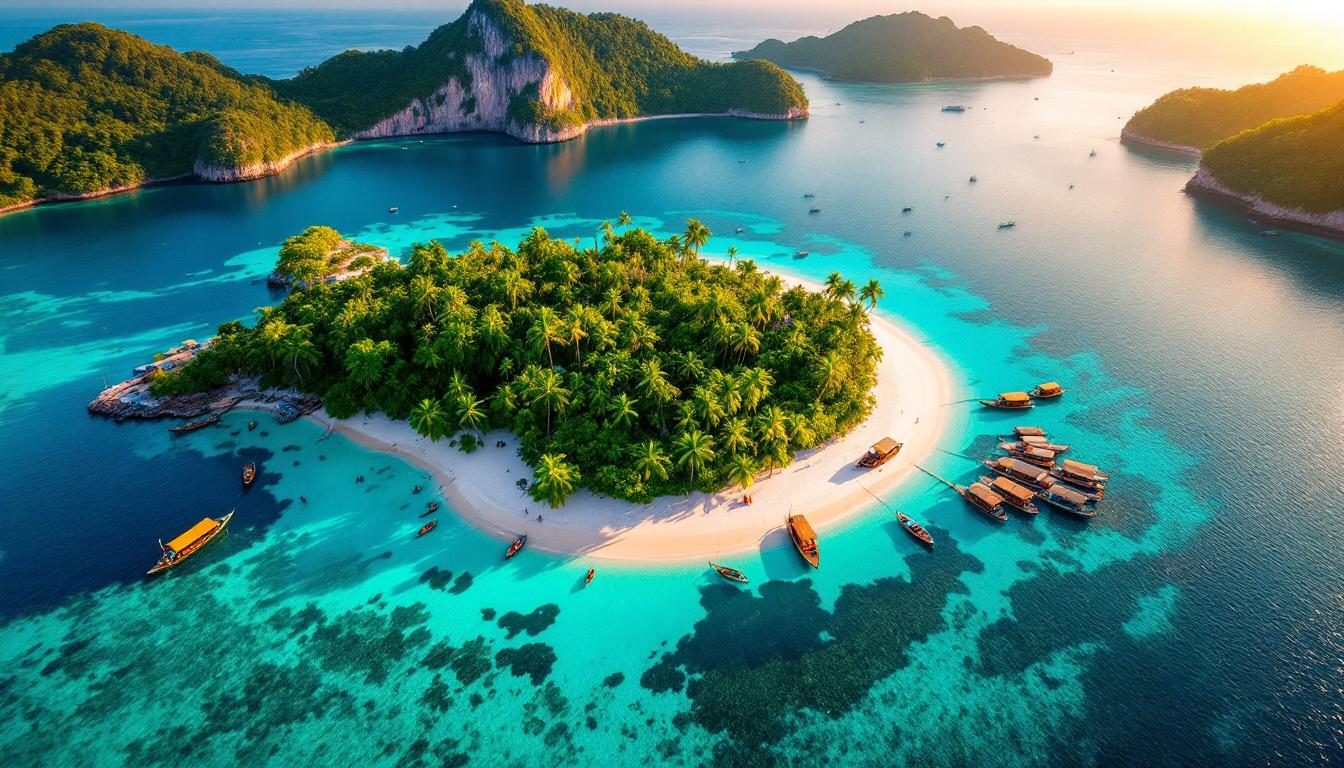
Best Islands in Thailand for First-Timers: Which One Is Right for You?
Best Islands in Thailand for First-Timers: Which One Is Right for You?
Thailand has over 1,400 islands. First-timers usually freeze up trying to choose. The truth is: there's no single "best" island — it depends on what you're looking for. This guide cuts through the noise and matches you to the right island based on your travel style, budget, and what you actually want to do when you get there.
Quick Match: Which Island Fits You?
| You want... | Go to... |
|---|---|
| Easy infrastructure, good nightlife, strong tourist scene | Koh Samui |
| World-class diving, backpacker energy | Koh Tao |
| Relaxed vibes, good beaches, no party scene | Koh Lanta |
| Bigger beaches, resort variety, easy access | Phuket |
| Dramatic scenery, long-tail boats, rock climbing | Krabi/Railay |
| Budget-friendly, beautiful beaches, off the beaten path | Koh Chang |
| Paradise isolation, very remote | Koh Lipe |
The Shortlist: Seven Islands for First-Timers
1. Koh Samui — The Easiest Starting Point
Koh Samui is Thailand's second-largest island and by far the most developed. It has its own international airport (USM), reliable 4G, full-service hospitals, and every kind of accommodation from 300 THB guesthouses to 15,000 THB overwater villas.
Best for: First-timers who want ease of access, tourists who want a recognisable level of service, couples, and families.
Key areas: - Chaweng Beach — The main strip. Most hotels, most restaurants, most nightlife. Great beaches but can feel crowded. - Bophut (Fisherman's Village) — Quieter, more local feel, excellent Friday night walking market. - Lamai — Smaller alternative to Chaweng. Fewer tourists, similar quality beaches. - Choeng Mon — Calm, family-friendly, less development.
Typical accommodation costs: - Budget guesthouse: 600–1,200 THB/night - Mid-range hotel: 1,800–4,000 THB/night - Beachfront resort: 4,500–12,000 THB/night
Getting there: Fly direct from Bangkok (Bangkok Airways, ~1 hour, 2,000–4,500 THB) or take a bus/train to Surat Thani then ferry (200–350 THB ferry, scenic but takes 5–6 hours total from Bangkok).
Booking early on EezyStay versus Agoda or Booking.com can save 15–25% on Samui hotels, particularly in Chaweng and Bophut where OTA markups are highest.
2. Koh Tao — The Diver's Island
Koh Tao is a small island (21 sq km) in the Gulf of Thailand, and it's earned a global reputation for diving. It has some of the cheapest PADI certifications in the world (Open Water: 9,000–12,000 THB) and crystal-clear water with genuinely excellent marine life.
Best for: Backpackers, divers (beginner and experienced), people who want a social scene without the excess of Koh Phangan.
Key areas: - Mae Haad — Main pier, most accommodation clusters - Sairee Beach — Long stretch of beach, bars, dive shops, most budget hotels - Chalok Baan Kao — Southern bay, calmer, good for snorkelling
Typical accommodation costs: - Dive resort dorm: 300–500 THB/night - Budget bungalow: 500–1,000 THB/night - Mid-range hotel: 1,200–3,000 THB/night
Getting there: Ferry from Surat Thani or Koh Samui. Night ferry from mainland saves a night's accommodation. No airport — everyone comes by boat.
3. Koh Lanta — For Those Who Want Peace
Koh Lanta Yai is the Andaman answer to the Gulf's busier islands. Long beaches, laid-back atmosphere, good food, no foam parties. It's popular with couples, digital nomads, and anyone who's been to Thailand before and wants somewhere quieter.
Best for: Couples, slow travellers, those escaping the party scene, snorkellers and divers (good visibility, no crowds).
Key areas: - Klong Dao — Most developed, good for families - Long Beach (Phra Ae) — Most popular stretch, mix of hotels and bungalows - Klong Nin — Quiet, local feel, fewer tourists - Kantiang Bay — Remote southern bay, dramatic scenery
Typical accommodation costs: - Budget bungalow: 500–900 THB/night - Mid-range resort: 1,500–3,500 THB/night - Boutique hotel: 2,500–6,000 THB/night
Getting there: Ferry from Krabi pier or Ao Nang (90 minutes, ~300 THB) or from Phuket in high season. Some people come as a day trip from Krabi but it deserves more time.
Seasonal note: Koh Lanta closes down significantly May–October (monsoon season). Most resorts shut. This is not an island to visit in low season unless you've verified your hotel is open.
4. Phuket — The Big One
Phuket is Thailand's largest island and the country's most visited tourist destination. It's more like a small province than an island — it has a city, multiple distinct beach areas, an international airport (HKT), shopping malls, and a population of 400,000 people.
Best for: Families, people who want maximum infrastructure, first-timers who want it all in one place, beach resort holidays.
Key areas: - Patong — The most famous, most commercial, highest prices, most nightlife. Not for everyone. - Kata and Karon — More relaxed, still excellent beaches, better value than Patong - Kamala — Quieter, upmarket feel - Phuket Old Town — Sino-Portuguese heritage, great food scene, excellent base for exploring - Rawai and Nai Harn — South of the island, local vibe, cheaper, beautiful beaches
Typical accommodation costs: - Budget guesthouse: 600–1,200 THB/night - Mid-range hotel: 2,000–5,000 THB/night - Beachfront resort: 5,000–20,000+ THB/night
Getting there: Direct flights from Bangkok (1 hour, multiple daily departures), plus direct international flights from many Asian cities. Well-connected.
5. Krabi and Railay Beach — Dramatic Scenery, Less Development
Technically Krabi is on the mainland, but Railay Beach — accessible only by long-tail boat — is one of Thailand's most spectacular locations. Limestone cliffs rising from the sea, clear water, and rock climbing routes that attract visitors from around the world.
Best for: Adventurers, climbers, photographers, travellers who prioritise scenery over nightlife.
Railay accommodation costs: - Budget: 800–1,500 THB/night - Mid-range resort: 2,500–6,000 THB/night
Getting there: Fly to Krabi Airport (KBV) from Bangkok (1 hour 15 minutes), then long-tail boat from Ao Nang to Railay (100–150 THB, 15 minutes).
6. Koh Chang — The Underrated Pick
Koh Chang sits near the Cambodian border in the eastern Gulf. It's Thailand's second-largest island, heavily forested, with waterfalls and decent beaches — but it sees far fewer tourists than the main islands. Prices reflect this.
Best for: Budget travellers, those who want nature alongside beach, people passing through to/from Cambodia.
Typical costs: 400–800 THB/night budget, 1,200–3,000 THB/night mid-range.
Getting there: Bus from Bangkok's Eastern Bus Terminal (Mo Chit or Ekkamai) to Trat, then ferry (approximately 5–6 hours total, 350–600 THB).
7. Koh Lipe — The Remote Choice
Koh Lipe in Satun Province is two hours by speedboat from Pak Bara pier or accessible from Langkawi, Malaysia. It's tiny, has stunning white-sand beaches, excellent snorkelling, and a very small number of hotels. It's the last frontier of accessible Thai islands.
Best for: Those who want to feel like they've discovered something, snorkellers, travellers who've done the main islands and want something different.
Costs: Higher than equivalent quality elsewhere due to remoteness. Expect 1,500–4,000 THB/night for decent mid-range. Budget options exist but are limited.
Note: Getting there takes planning. See our Koh Lipe hotel and access guide for full logistics.
Seasonality: When to Go to Which Island
Thailand has two main seasons, and they affect different coasts differently.
| Period | Gulf Islands (Samui, Koh Tao, Koh Phangan) | Andaman Islands (Phuket, Krabi, Lanta, Lipe) |
|---|---|---|
| Nov–April | Peak season, best weather | Peak season, best weather |
| May–June | Shoulder/low, cheaper, sporadic rain | Heavy monsoon, rough seas |
| July–October | Some rain, but often fine | Monsoon, many resorts close |
| Nov | Starting to pick up | Excellent |
First-timers often don't realise the Gulf and Andaman coasts have opposite monsoon seasons. When Phuket is raining hard (July–October), Koh Samui and Koh Tao may be perfectly fine, and vice versa.
How to Book
For any of these islands, compare prices across platforms before committing. EezyStay specialises in Thailand hotels and regularly offers lower rates than Agoda and Booking.com on the same properties — particularly useful for island accommodation where the selection on smaller platforms is limited.
For a full cost breakdown of what you'll spend once you're there, see our Thailand travel budget per day guide.
Frequently Asked Questions
Which Thai island is best for first-timers?
Koh Samui is the safest choice for first-timers — it has its own airport, reliable infrastructure, excellent beaches, and works for every travel style from budget to luxury. If you're specifically interested in diving, Koh Tao is better. If you want the Andaman Sea's dramatic scenery, go to Krabi or Phuket.
Which Thai island is cheapest?
Koh Chang and Koh Tao offer the best value. Koh Chang has lower prices overall due to fewer tourists. Koh Tao is affordable partly because budget dive resorts keep accommodation costs low. Koh Lipe is the most expensive due to its remoteness. Phuket (Patong specifically) can be surprisingly expensive despite its mainstream appeal.
How many days do I need on a Thai island?
Minimum 3 nights to feel the rhythm and see the main beaches/attractions. 5–7 nights is the sweet spot for a proper island stay without rushing. If you're doing a diving course on Koh Tao, budget 5–6 days just for that. Island-hopping between 2–3 islands over 2 weeks is a popular and satisfying itinerary.
Can I reach Thai islands without a flight?
Yes — most Gulf islands (Koh Samui, Koh Phangan, Koh Tao) are reachable from Bangkok by overnight bus/train then ferry, no flight required. Koh Chang is a bus + ferry from Bangkok. Andaman islands (Phuket, Krabi, Lanta) are more practically reached by budget flight, though buses exist.