Best Hotels Chiang Rai
City Centre and Night Bazaar Area
The Night Bazaar area in central Chiang Rai has most of the city's mid-range and budget hotels. It's walkable from the main attractions — Wat Ming Muang, Clock Tower (lit up at night), Night Market — and a short songthaew from the White Temple and Blue Temple.
Best hotels in central Chiang Rai:
| Hotel | Price/Night (approx) | Best For |
|---|---|---|
| Le Meridien Chiang Rai Resort | 5,000–10,000 THB | Luxury riverside, full resort |
| Wangcome Hotel | 1,200–2,000 THB | Central, old-school Thai hotel, value |
| The Legend Chiang Rai | 3,000–5,500 THB | Boutique resort, riverside, cultural |
| Dusit Island Resort | 2,500–4,500 THB | River island setting, dated but good value |
| Laluna Hotel & Resort | 1,500–2,500 THB | Good mid-range, central |
Le Meridien Chiang Rai sits on the bank of the Kok River and is easily the best luxury property in the city. Excellent pool, strong breakfast, well-run service, and a setting that makes Chiang Rai feel more resort-like than expected.
The Legend is the best boutique option — Lanna-style architecture, beautiful gardens, a spa, and strong cultural programming including cooking classes and temple visits. More character than any chain property in the city.
Near the White Temple (Wat Rong Khun)
Thailand's most famous contemporary temple is about 13 km south of the city centre. Some accommodation sits in this area, catering to visitors who want to beat the day-trip crowds.
Getting to the White Temple for opening time (8am) before the tour buses arrive makes the whole experience significantly better.
Accommodation near Wat Rong Khun:
| Hotel | Price/Night (approx) | Notes |
|---|---|---|
| Baan Suan Sook | 800–1,500 THB | Small guesthouse, near White Temple |
| Various local homestays | 400–800 THB | Book via guesthouse booking sites |
What to Do in Chiang Rai
The Temples (the main draws)
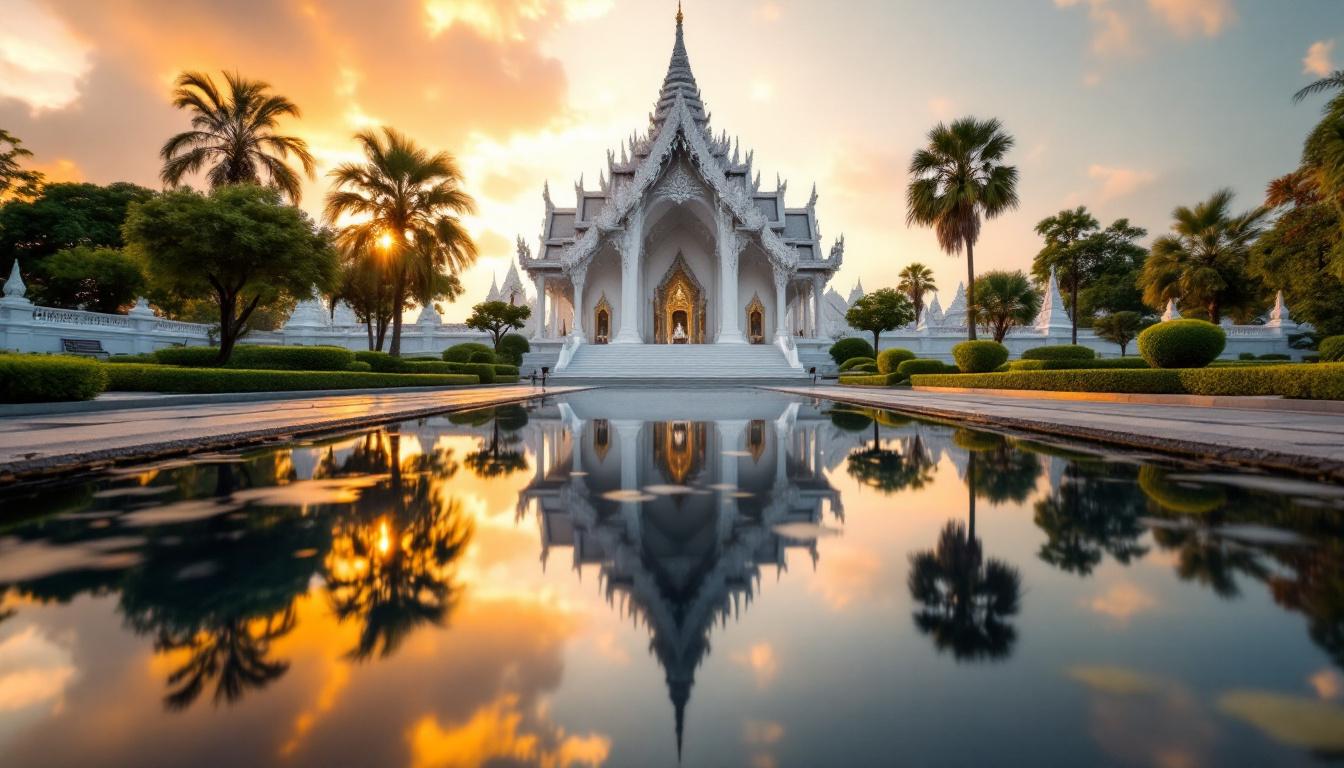
Wat Rong Khun (White Temple): The most photogenic temple in Thailand — a contemporary masterpiece by artist Chalermchai Kositpipat, still being completed. All-white exterior covered in mirror glass. Surreal and stunning. Admission 100 THB.
Wat Rong Suea Ten (Blue Temple): Newer and less visited than the White Temple but equally spectacular — cobalt blue exterior with gold accents and intricate nagas. Often less crowded, which makes it easier to appreciate.
Baan Dam (Black House): Artist Thawan Duchanee's extraordinary collection of traditional Thai structures filled with unconventional art — animal skins, bones, dark sculptures. Fascinating and unlike anything else in Thailand.
Doi Tung Royal Villa: Former royal residence in the hills north of Chiang Rai. Formal gardens, mountain views, and a fascinating story about the late Princess Mother's reforestation project in the former opium hills.
The Golden Triangle
Where Thailand, Laos, and Myanmar meet at the confluence of the Mekong and Ruak Rivers. The actual geographical point is viewed from a boat on the Thai side. The Hall of Opium museum in the Thai Golden Triangle is one of the best museums in the country — genuinely well-designed and informative.
Best hotel in the Golden Triangle area:
| Hotel | Price/Night (approx) | Best For |
|---|---|---|
| Anantara Golden Triangle Elephant Camp & Resort | 12,000–25,000 THB | Ultra-luxury, elephant sanctuary, views |
| Imperial Golden Triangle Resort | 1,500–2,500 THB | Budget for the location, views |
The Anantara Golden Triangle is one of the most famous hotels in northern Thailand — the views from your villa over the three-country confluence are extraordinary, and it operates one of the best-regarded ethical elephant experiences in the country. It's expensive for Chiang Rai but genuinely special.
Doi Mae Salong (Tea Mountain)
About 70 km north of Chiang Rai city, this mountain was settled by Nationalist Chinese soldiers (KMT) who retreated from China after 1949. Their descendants still farm here, growing oolong tea on terraced hillsides. The landscape looks more like Yunnan Province than Thailand.
The town of Mae Salong has tea shops, Chinese teahouses, pony trekking, and a Sunday morning market with incredible Yunnanese Chinese food. The drive through the mountains is spectacular.
Best accommodation in Mae Salong:
| Hotel | Price/Night (approx) | Notes |
|---|---|---|
| Little Home Guesthouse | 600–1,200 THB | Classic Mae Salong guesthouse, family-run |
| Mae Salong Villa | 800–1,500 THB | Views, mid-range, comfortable |
| Shin Sane Guest House | 400–800 THB | Budget, reliable |
Chiang Saen and Chiang Khong
Chiang Saen is an ancient city on the Mekong with 13th-century ruins — easy half-day from Chiang Rai city. The road along the Mekong between Chiang Saen and Chiang Khong is one of the more beautiful river drives in the region.
Chiang Khong is the departure point for the slow boat to Luang Prabang (Laos) — a two-day river journey down the Mekong that's one of Southeast Asia's classic overland routes.
Chiang Rai Hotel Price Guide (2025)
| Category | Price Range | What to Expect |
|---|---|---|
| Budget | 300–900 THB | Guesthouse, basic facilities, city area |
| Mid-range | 1,000–3,000 THB | Hotel with pool, central or near temples |
| Boutique/Upper | 3,000–7,000 THB | Character property, good service |
| Luxury | 7,000–15,000 THB | Le Meridien, The Legend tier |
| Ultra | 15,000+ THB | Anantara Golden Triangle |
Chiang Rai vs Chiang Mai: Should You Do Both?
Yes, if time allows. They're 3–4 hours apart (bus or minivan) and offer different experiences.
| Factor | Chiang Rai | Chiang Mai |
|---|---|---|
| Tourist density | Much lower | Much higher |
| Nightlife | Minimal | Solid (Nimman area) |
| Temples | Outstanding (White, Blue) | Many but none quite like those |
| Food scene | Smaller but great | World-class |
| Surrounding nature | Spectacular (Golden Triangle, mountains) | Very good (Doi Inthanon) |
| Prices | 20–30% cheaper | Slightly higher |
The classic itinerary: Chiang Mai → Pai → Chiang Rai → return to Chiang Mai for flight. Or Chiang Mai → Chiang Rai → slow boat to Laos if you're continuing north.
When to Visit Chiang Rai
Same pattern as Chiang Mai — northern Thailand:
November to February: Best. Cool, clear, rice harvested. Mornings can be cold (10–15°C) at altitude. Great trekking weather. March to May: Smoke season in March/April — burning creates haze. Hot and dry otherwise. June to October: Green season — lush, fewer tourists, occasional road flooding in hills.
Getting Better Rates on Chiang Rai Hotels
Chiang Rai is less OTA-saturated than Chiang Mai or Bangkok — boutique properties sometimes have better rates than what appears on the major platforms. EezyStay includes Chiang Rai accommodation with current rates worth comparing.
Related Reading
- Best Hotels in Pai 2025: Mountain Town Boutique Stays
- Best Hotels in Nan 2026 — Thailand's Mountain Province & Cultural Gem
- Best Hotels in Lampang 2026 — Northern Thailand's Hidden Gem
- Best Hotels in Chiang Mai 2025: Old City to Nimman
- Chiang Mai vs Chiang Rai: Northern Thailand's Two Cities
Browse Chiang Rai hotels at eezystay.com.
FAQs
How do I get from Chiang Mai to Chiang Rai? Bus (3–4 hours, around 150 THB from Chiang Mai Arcade Terminal), minivan (3 hours, 200–250 THB, picks up from guesthouses), or domestic flight (35 minutes, from around 1,000 THB one-way). The bus and minivan are fine — the road is good and largely flat.
Is Chiang Rai airport convenient? Yes — it's small, efficient, and about 8 km north of the city centre. Bangkok Airways flies from Bangkok (1 hour 15 min), and there are connections from Chiang Mai.
Is Chiang Rai good for trekking? Yes — the surrounding hills have trekking routes to hill tribe villages (Karen, Akha, Lahu, Lisu). The best operators run 2–3 day treks with community-based overnight stays. Significantly less commercialised than Chiang Mai trekking.
Can I cross into Myanmar or Laos from Chiang Rai? Laos: Yes, via Chiang Khong border crossing (2 hours south of Chiang Rai). The slow boat to Luang Prabang departs from Ban Houayxay on the Laos side. Myanmar: Mae Sai border crossing is technically open for day-visit permits, but check current conditions — the situation in Myanmar is unstable.